Choosing a reliable supplier for a Bath Shower Set takes more than comparing polished product photos. Buyers need to assess materials, cartridge performance, surface finishes, testing records, and export experience. A showroom sample can look flawless. Daily use is the harder test.
Grand View Research’s Bathroom Fixtures Market Size report estimated the global market at approximately US$82.5 billion in 2023, with projected growth through 2030. This broad category includes multiple fixture types; it does not measure Bath Shower Set sales alone. That distinction matters. UN Comtrade trade data can help buyers examine international product flows, but customs classifications may not isolate complete shower sets. Market figures are useful context, not proof that a particular manufacturer is dependable.
China offers a wide supplier base, from factories focused on brass mixers to companies selling coordinated showers, rails, and handsets. The differences often appear in the details: ceramic cartridge specifications, plating thickness, spare-part availability, and consistency between production batches. Ask for current test reports, product drawings, warranty terms, and clear factory information. Then compare samples against the documents. A low quotation may still be a poor fit if replacement parts are difficult to source. No report can replace careful verification. This guide examines how to identify China’s best Bath Shower Set manufacturers and suppliers, using practical sourcing criteria alongside industry data—and noting where published figures leave unanswered questions.
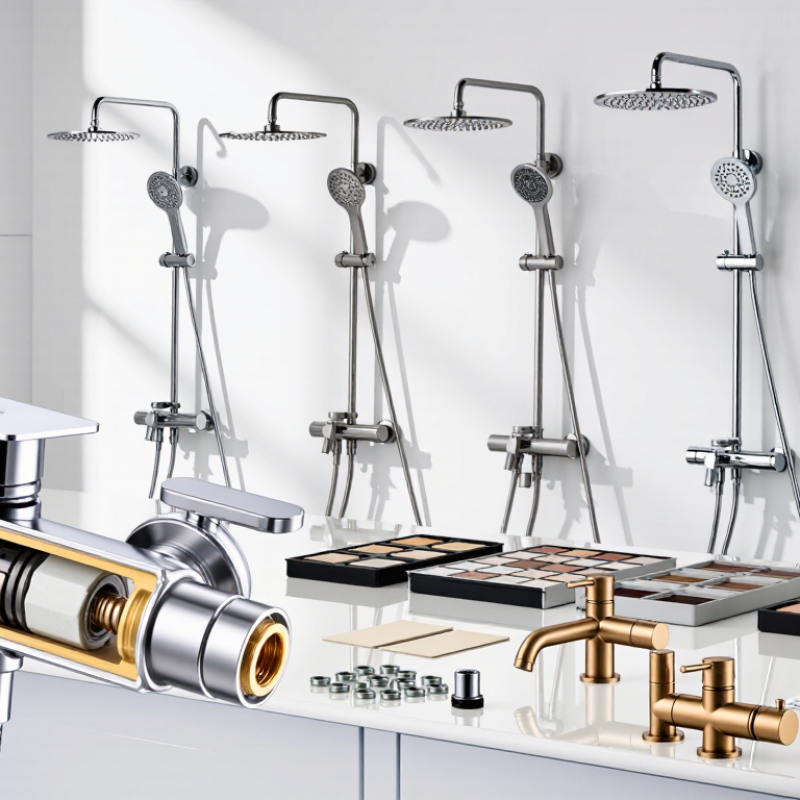
A bath shower set is a group of connected parts, not just a showerhead. The control valve mixes hot and cold water, while its cartridge regulates temperature and flow. A diverter redirects water between outlets, such as a fixed head and handheld shower. Small parts matter.
The visible pieces shape everyday use. A shower arm holds the fixed head away from the wall; a flexible hose links the handheld unit to its supply. A wall bracket keeps the hand shower within reach, though its height may not suit every user. Check that the hose bends freely and that controls are easy to grip with wet hands.
Performance depends on the parts working together. The U.S. Environmental Protection Agency’s WaterSense showerhead specification sets a maximum flow rate of 2.0 gallons per minute, compared with the common 2.5-gallon-per-minute baseline, while requiring satisfactory spray performance. That is a useful benchmark, not a promise that every low-flow set will feel identical. Spray pattern, pressure, and installation all affect the experience. A neat-looking set can still disappoint if its diverter is stiff or its hose kinks.

The showerhead is the main component affecting a bath shower set’s flow rate. The chart compares the U.S. federal maximum of 2.5 gallons per minute with the EPA WaterSense specification maximum of 2.0 gallons per minute, converted to liters per minute. Actual flow depends on the showerhead and water pressure.
Sources: U.S. Code of Federal Regulations and U.S. EPA WaterSense. Conversion: 1 U.S. gallon = 3.785 liters.
China’s bath shower set manufacturers and suppliers generally fall into several practical groups. OEM and ODM factories produce complete sets, including mixers, showerheads, hoses, and mounting parts. Some develop designs from buyer drawings; others offer existing models with limited customization. Component-focused manufacturers specialize in items such as brass valve bodies or handheld showerheads, then work with partners to assemble full sets. Different strengths.
Trading companies and sourcing suppliers connect buyers with multiple factories. They can help compare finishes, packaging, and order quantities, but may not control production directly. Ask who makes each component and where quality checks happen. A clear answer matters.
For a supplier review, inspect sample details closely: handle movement, hose flexibility, cartridge fit, and the finish around threaded joints. Request material specifications and available test records, and confirm how changes are handled between samples and bulk production. These checks are useful, though paperwork alone cannot prove consistent workmanship. A bright showroom can look reassuring; a poorly fitted connection tells a different story. Some suppliers communicate quickly but give vague answers about tolerances. That is worth reflecting on before choosing a partner.
When assessing bath shower set manufacturers and suppliers, look beyond polished product photos. Request recent test reports and verify that certificates match the exact product range, factory, and destination market. A certificate for one component may not cover the complete shower set. Check dates and issuing bodies, too. Small details matter.
Ask how incoming brass, cartridges, hoses, and surface finishes are inspected. A reliable supplier should explain its process and provide measurable checks, such as pressure testing or finish-thickness records. Request a sample and examine the diverter, handle movement, thread fit, and spray pattern. Feel the difference. If answers stay vague, pause.
Customization should be confirmed in writing. Share drawings, dimensions, finish samples, packaging needs, and target tolerances before production. Ask which changes affect tooling, lead time, or minimum order quantities. Then approve a pre-production sample against the agreed specifications. Even careful reviews miss things; a sample cannot reveal every batch variation. Keep inspection criteria and change approvals documented, and ask how defects are recorded and addressed. This may feel slow. It is often worth it.
Comparing Chinese bath shower set manufacturers starts with the product range. Some offer exposed and concealed systems, hand showers, overhead heads, and matching mixers. Others focus on a few standard configurations. Check whether the supplier can provide replacement cartridges, hoses, and mounting parts. Small details matter when a project needs consistent finishes across several bathrooms. Ask for material specifications and test records, not only polished product photos.
Pricing needs context. A low quotation may exclude accessories, packaging, or custom finish costs. Request a like-for-like breakdown for the same material, surface treatment, and order quantity. Confirm minimum order quantities and sample charges, too. The cheapest option is not always cheaper after revisions. That can be hard to compare.
Production capacity affects delivery, especially for large or seasonal orders. Ask about monthly output, current workload, and realistic lead times for samples and bulk production. A factory’s stated capacity is useful, but it does not prove that your order has a reserved production slot. Service is just as practical: note response times, drawing support, inspection arrangements, and how defects are documented. Keep written records. One weakness in supplier comparisons is that buyers often rate service from a single conversation; follow-up during sampling may tell a more reliable story.
Start by matching the supplier’s factory capabilities to your shower-set specifications. Request a bill of materials, drawings, and production-site address. Confirm whether the company manufactures key parts or outsources them. A polished showroom is not proof. Ask for current quality certificates, then verify the certificate number, issuing body, and covered factory.
ISO’s 2022 Survey recorded about 1.27 million ISO 9001 certificates worldwide; certification alone cannot establish product quality or prove that a particular site is covered.
Check samples against the details that affect daily use: handle movement, spray pattern, finish consistency, and connection dimensions. Request material declarations and relevant test reports for the exact model, not a similar product.
The World Bank’s 2023 Logistics Performance Index placed China 19th, with a score of 3.7 out of 5. That offers broad logistics context, not a guarantee of punctual delivery.
Agree on packaging, inspection points, defect limits, and a written remedy before production. Keep one approved sample as your reference. Small inconsistencies can be easy to miss, and a supplier’s first answer may not resolve every concern. Review the factory audit and inspection evidence yourself.