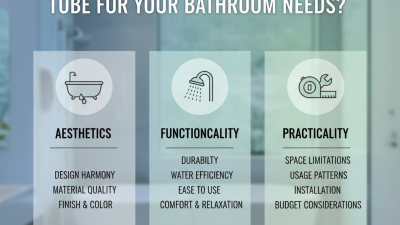
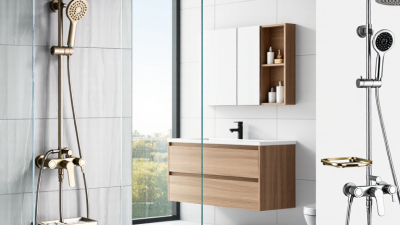
Choosing the right Shower Set Faucets can shape the comfort, safety, and visual balance of an entire bathroom. A polished finish may attract attention, but it cannot compensate for weak water control, poor installation, or difficult maintenance. The best choice begins with the project’s real conditions: water pressure, wall structure, plumbing layout, household habits, and budget.
Plumbing expert Richard Trethewey offers a practical reminder: “Good plumbing should work quietly, safely, and consistently.” That principle applies directly to Shower Set Faucets. A reliable set should provide smooth temperature adjustment, stable pressure, durable cartridges, and clear compatibility with existing connections. It should also suit the users. A family bathroom may need an easy-to-operate thermostatic valve, while a compact guest bathroom may benefit from a simpler configuration.
Experience can reveal details that product images hide. Check the valve depth before closing the wall. Measure the shower arm position. Hold the finish sample beside the tiles, not only beneath showroom lighting. Brushed metal can disguise fingerprints better than glossy chrome, although cleaning habits still matter.
There is no perfect faucet for every project. We often focus too heavily on style. That is worth reconsidering. A beautiful handle that feels loose after one year becomes an expensive disappointment. This guide will examine materials, valve systems, installation requirements, water performance, maintenance, and long-term value, helping you select Shower Set Faucets with greater confidence and fewer avoidable surprises.
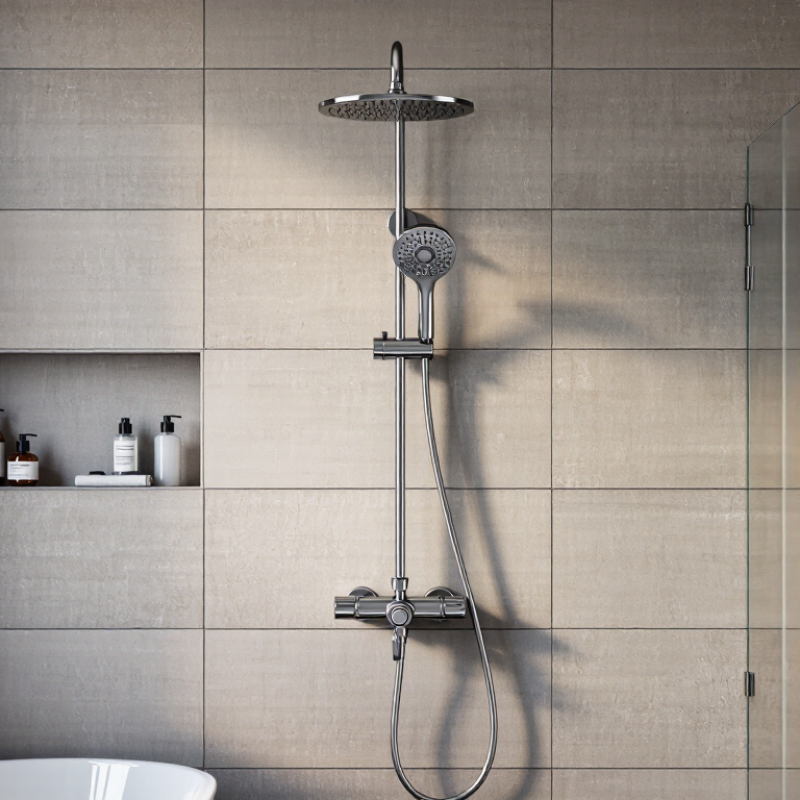
Before choosing shower set faucets, define how the bathroom will actually be used. Count regular users, children, older adults, and anyone with limited mobility. A handheld sprayer may matter more than a large overhead head. It can support seated washing and easier rinsing.
Measure the shower enclosure carefully. Record wall thickness, pipe locations, ceiling height, and available water pressure. A replacement set may not fit an existing valve without opening the wall. That detail is often missed.
The U.S. Environmental Protection Agency reports that showers represent nearly 17% of residential indoor water use. WaterSense-labeled showerheads use no more than 2.0 gallons per minute while meeting performance requirements, compared with the federal 2.5-gallon standard. Select flow performance, not only appearance.
Think about daily control. A thermostatic valve can help maintain steadier temperature, while separate volume control can reduce wasted water during setup. For shared bathrooms, choose controls that are easy to read with wet hands. Check whether the diverter supports every outlet you need, including a rain head, hand shower, or body sprays. More outlets mean more complexity.
Keep maintenance realistic. Hard-water areas may clog small nozzles quickly, even when the faucet looks refined. Select removable spray plates and accessible filters where possible. I have seen attractive installations become frustrating because cleaning access was ignored.
The National Kitchen and Bath Association’s bathroom design guidance consistently emphasizes accessibility, durability, and user-centered planning. Those priorities should shape the specification before finish samples enter the discussion.
Compare the shower set faucet type before choosing its finish or shape. A pressure-balancing valve limits sudden temperature changes when another fixture uses water. It suits apartments, guest bathrooms, and most family installations. A thermostatic valve controls temperature more precisely and can support separate flow controls. It is useful for households with children or older users. The U.S. Environmental Protection Agency’s WaterSense specification limits labeled showerheads to 2.0 gallons per minute, compared with the federal 2.5-gpm standard. Lower flow can reduce water and heating costs, but weak pressure may feel disappointing.
Configuration changes the installation completely. An exposed set keeps the valve and pipework visible, simplifies maintenance, and often reduces remodeling time. A concealed set creates a cleaner wall profile, but the rough-in depth must be accurate. Single-outlet systems control one showerhead. Dual-outlet systems can combine a rain shower and hand shower, usually with a diverter. Check whether both outlets can run together; some valves cannot supply enough volume.
I have seen attractive sets fail because the installer ignored water pressure, pipe size, or access panels. Measure the finished wall, not the unfinished stud space. Also check the valve’s service parts before closing the wall. The EPA WaterSense program estimates that an efficient showerhead can save a family about 2,700 gallons of water annually. That figure depends on usage, so it should guide decisions, not replace site testing.
Choosing shower set faucets starts with material, not appearance. In site inspections, solid brass bodies usually feel more dependable than thin, unmarked alloys. Stainless steel can also perform well, especially in humid bathrooms. Ask for material specifications, not vague terms such as “premium metal.” Examine cartridge construction and replacement access before ordering. A concealed valve may look clean, but repairs become difficult when the service opening is too small. I once approved a compact layout that saved wall space and complicated maintenance later. That decision still influences my checks.
Finish affects cleaning, durability, and visual consistency. Brushed surfaces often hide water spots better than highly polished ones. However, finish quality depends on proper plating or coating preparation. Inspect corners, threads, and handle joints for thin coverage. Then verify installation standards. The valve should match local plumbing codes, water-pressure limits, pipe size, and temperature-control requirements. Confirm hot and cold connections before closing the wall. Use a pressure test while the fittings remain visible. Check the shower arm angle with the actual user height, not a drawing alone. Anti-scald protection deserves special attention in family bathrooms. Certification documents can support confidence, but they do not replace skilled installation. I sometimes focus too much on appearance. A faucet can look excellent and still perform poorly when alignment, sealing, or access is overlooked. Leave room for adjustment.
| Evaluation Dimension | Option / Specification | Typical Performance | Project Advantages | Points to Verify | Recommended Use |
|---|---|---|---|---|---|
| Main valve body material | Brass, commonly specified as a lead-free or low-lead plumbing alloy | Strong, machinable, and suitable for hot and cold water service when the alloy complies with local potable-water requirements | Good balance of durability, cost, thread strength, and temperature resistance | Confirm lead-content limits, corrosion resistance, pressure rating, and compatibility with local plumbing codes | Most residential, hospitality, and multi-unit projects |
| Exposed trim material | 304 stainless steel | High resistance to general corrosion and good surface durability in normal indoor bathroom conditions | Suitable for contemporary designs and frequent cleaning | Check grade declaration, thickness, edge quality, and resistance to chloride-based cleaners | Standard residential and commercial bathrooms |
| Exposed trim material | 316 stainless steel | Improved resistance to chlorides and coastal or high-humidity exposure compared with 304 stainless steel | Longer service potential in marine environments or where cleaning chemicals are more aggressive | Verify that the complete exposed component, not only a surface layer, uses the stated grade | Coastal hotels, spas, wellness facilities, and high-humidity locations |
| Cartridge and sealing system | Ceramic disc cartridge with replaceable seals | Provides smooth control and reliable shutoff when water quality, alignment, and installation are acceptable | Low routine maintenance and reduced risk of dripping caused by worn rubber washers | Confirm replacement availability, service access, maximum operating temperature, and pressure range | Projects requiring long service intervals and easy maintenance |
| Thermostatic control | Thermostatic mixing valve with temperature-limiting stop | Balances hot and cold water to help maintain a selected temperature when correctly sized and supplied | Improves user comfort and can reduce sudden temperature changes | Check compliance with the applicable local standard, inlet filters, minimum flow, temperature setting, and access for servicing | Hotels, healthcare facilities, family bathrooms, and accessibility-focused projects |
| Surface finish | Polished chrome plating | Smooth reflective surface that is generally easy to wipe clean | Widely available, visually versatile, and typically cost-effective | Request coating adhesion, surface corrosion, thickness, and chemical-resistance test information | General-purpose residential and commercial installations |
| Surface finish | PVD finish, such as brushed metallic or matte black | A vapor-deposited decorative coating that can provide good abrasion and corrosion resistance when properly applied | Supports coordinated interior designs and can offer a more durable decorative surface than basic paint | Verify substrate preparation, adhesion testing, cleaner compatibility, and warranty conditions | Design-led residential, hospitality, and premium renovation projects |
| Showerhead flow rate | Up to 2.5 gallons per minute (9.5 liters per minute) where permitted by the applicable jurisdiction | Provides a common performance baseline in the United States; local limits may be lower | Helps balance water efficiency, user experience, and water-heating demand | Check local maximum-flow rules, tested flow rate, pressure conditions, and whether the rating includes all outlets | Water-conscious residential and commercial projects |
| Installation configuration | Concealed valve with separate trim plate | Requires accurate in-wall positioning and sufficient service access before wall finishing | Creates a clean appearance and leaves fewer exposed components | Confirm rough-in depth, valve orientation, blocking, waterproofing, and access-panel requirements | New construction and major bathroom renovations |
| Installation configuration | Exposed bar or surface-mounted valve | Mounts on the finished wall with simpler pipe routing and easier visual inspection | Useful for retrofit work and projects where wall opening must be minimized | Verify wall anchors, pipe-center dimensions, projection clearance, and finished-wall compatibility | Renovations, accessible bathrooms, and fast-installation projects |
| Pipe connections | Threaded connections sized to the local plumbing system | Common connection sizes include 1/2 inch in many residential systems, but regional standards vary | Correct sizing reduces adapters, leak points, and installation time | Confirm thread type, inlet spacing, flow direction, sealing method, and compatibility with copper, PEX, or other pipework | All projects; verify before procurement |
| Applicable standards | ASME A112.18.1/CSA B125.1 or the equivalent local plumbing standard | Covers performance and construction requirements for many plumbing supply fittings in North American applications | Provides a recognized benchmark for durability, leakage, and functional performance | Request current test reports or certification documents applicable to the exact model and configuration | North American projects; use regional equivalents elsewhere |
| Water-contact compliance | Certification for materials intended for contact with drinking water | Helps demonstrate that wetted materials meet applicable extraction or health-effect requirements | Supports regulatory approval and specification review | Check the required jurisdictional certification, lead restrictions, and whether it covers the complete fitting | Public, hospitality, healthcare, and regulated building projects |
| Maintenance and warranty | Replaceable cartridges, filters, seals, and documented spare parts | Reduces the need to replace the complete shower set after normal wear | Improves lifecycle value and simplifies facility maintenance | Confirm parts availability period, warranty exclusions, cleaning instructions, and service documentation | High-occupancy buildings and projects with strict maintenance budgets |
How to Choose the Best Shower Set Faucets for Your Project?
Choosing a shower set faucet starts with the wall, not the finish. Check the existing valve, pipe size, mounting depth, and water connections before ordering. A polished faucet cannot compensate for incompatible plumbing. Measure twice, especially when replacing an older shower system.
Match features to daily use. A thermostatic valve can maintain a steadier temperature during pressure changes. A pressure-balancing valve may suit simpler installations and smaller budgets. Consider separate controls for the overhead shower and hand shower. They improve flexibility, but they also require more precise installation. Keep it practical.
Water performance depends on pressure, flow rate, and local restrictions. A wide shower head may feel weak in a low-pressure system. Ask for tested flow data, not vague performance claims. Look for stable spray coverage, easy-clean nozzles, and reliable temperature control. These details matter with soap-covered hands. I once chose a large shower head without checking supply pressure. The spray looked impressive, but the experience was disappointing. That mistake changed my checklist. Leave access to service parts, too. Even durable components may need cleaning or replacement. A careful match between features, compatibility, and water performance creates a shower that works well beyond installation day.
Choosing a shower set on price alone can create expensive problems later. Start with the total project budget, including valves, labor, wall access, and replacement parts. A reliable set should include a pressure-balanced or thermostatic valve, a durable cartridge, and clear installation instructions. Check whether the valve matches your existing pipe layout. Reworking a finished wall is rarely cheap.
Water efficiency also protects long-term spending. The U.S. Environmental Protection Agency’s WaterSense showerhead specification limits certified models to 2.0 gallons per minute, compared with the federal maximum of 2.5 gallons. The U.S. Department of Energy reports that water heating uses about 18% of household energy. A controlled flow can therefore reduce both water and heating costs, though actual savings depend on household habits.
Inspect the finish under bright light. Look for even plating, firm handles, and smooth diverter movement. The cartridge should be replaceable, not sealed behind an obscure part number. EPA’s Fix a Leak Week data says household leaks can waste nearly 10,000 gallons yearly. Ask about pressure testing and warranty coverage before buying. A long warranty sounds reassuring, but read its exclusions. I once focused too heavily on appearance and overlooked valve access. That mistake made installation slower. Budget decisions deserve technical checks, not showroom confidence.