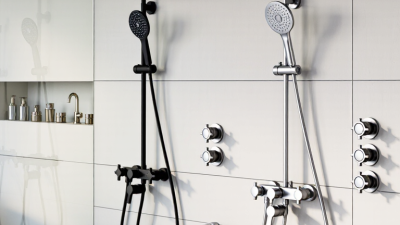
2026 Best Bathroom Shower Sets for Global Buyers
Choosing the right shower system is no longer a simple style decision. Global buyers now compare water efficiency, installation standards, material quality, pressure performance, and after-sales support. A polished finish may attract attention, but the valve behind the wall determines daily reliability.
For this 2026 guide, Bathroom Sets Shower options are examined through practical buying conditions. These include compact urban bathrooms, hard-water regions, family homes, hotels, and renovation projects. We consider thermostatic control, stainless steel construction, ceramic cartridges, hand-shower flexibility, and spare-part availability. Measurements matter too. A rainfall head can look impressive, yet it may perform poorly with limited water pressure.
Bathroom fittings specialist Daniel Mercer explains, “A beautiful shower fails when its water pressure ignores the room.” That warning deserves attention. It is easy to trust photographs. It is harder to verify pipe compatibility, flow rates, thread sizes, and local certification requirements. Buyers should request technical drawings and installation guidance before ordering.
Small details matter.
This overview also recognizes uncertainty. Product claims can change between markets, and online specifications are sometimes incomplete. Even respected brands may offer different components by region. Therefore, the best Bathroom Sets Shower choice is not always the most expensive model. It is the system that fits the building, water supply, maintenance skills, and long-term budget. A careful buyer may sacrifice a dramatic finish for dependable parts. That is not glamorous, but it is often wiser.
Classify Shower Sets by Type and Check ASME A112.18.1 and EN 1112
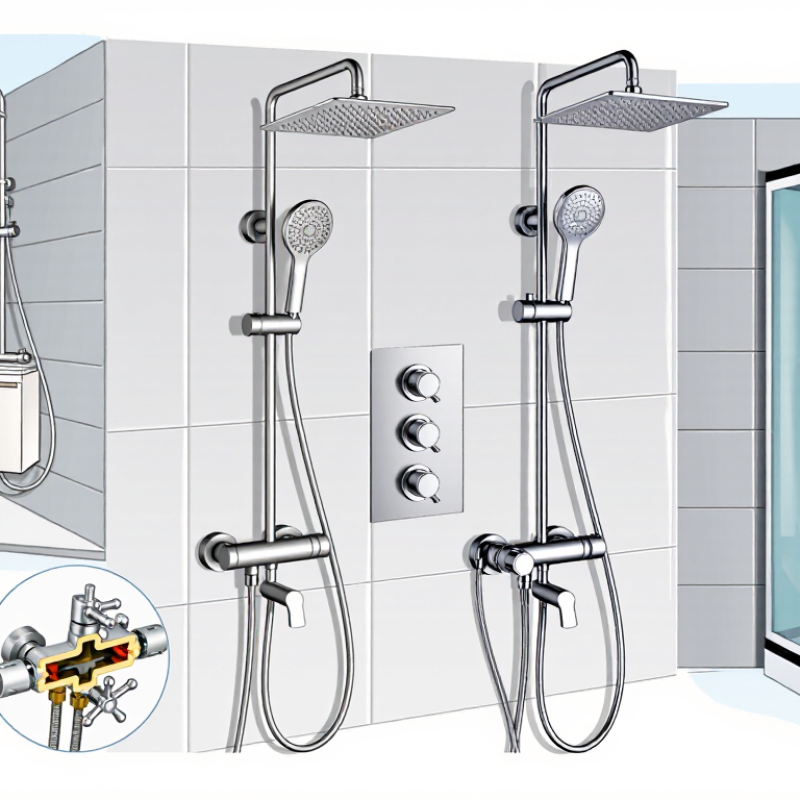
For global buyers, the best bathroom shower set depends on type, water conditions, and market requirements. Exposed mixer sets are easy to access and maintain. Concealed sets create a cleaner wall appearance but need accurate installation depth. Thermostatic sets help control temperature changes. Hand-shower rails suit compact bathrooms, while overhead sets provide wider coverage. Combination sets offer both options. They also need adequate flow and careful height planning. This classification is useful, but not perfect.
ASME A112.18.1 applies to plumbing supply fittings commonly sold in North American markets. It addresses materials, dimensions, connections, performance, and durability. EN 1112 focuses on shower outlets for sanitary tapware. It covers dimensions, mechanical strength, hydraulic performance, and resistance to temperature and pressure. One standard may not cover every part of a complete shower set. Ask for current test reports, the testing laboratory, and the exact model reference. Check whether the evidence covers the full set or only its valve.
Field checks should include thread size, hose length, flow rate, pressure range, and temperature limits. Compare these details with the destination country’s water conditions. A thermostatic cartridge may perform poorly with unstable pressure. Small details matter. Request installation drawings and replacement-part information before ordering. Product documents sometimes omit the shower outlet, even when the main valve appears compliant. That gap deserves careful review. Reliable purchasing means matching the product type, market, installation, and supporting evidence.
2026 Best Bathroom Shower Sets for Global Buyers
Shower-set classification and flow-rate benchmarks related to ASME A112.18.1 and EN 1112
How to read this chart: The 9.5 L/min value represents the U.S. federal maximum flow rate for showerheads, equivalent to 2.5 gallons per minute at 80 psi. The 7.6 L/min value represents the EPA WaterSense benchmark, equivalent to 2.0 gallons per minute.
Standards check: ASME A112.18.1/CSA B125.1 is commonly referenced for plumbing supply fittings in North America. EN 1112 covers shower outlets in Europe and evaluates characteristics such as flow performance, mechanical strength, leakage resistance, and connection requirements. EN 1112 does not establish one universal maximum flow rate for every shower set, so buyers should verify the product’s declared flow data and test documentation.
Shower-set types: Hand shower sets offer flexible user positioning; fixed shower sets provide a simple overhead outlet; exposed thermostatic sets combine visible pipework with temperature control; concealed thermostatic sets place the valve inside the wall for a cleaner appearance.
Check Temperature Control Under EN 1111 and ASSE 1016 Standards
For global buyers, shower temperature control deserves more attention than finish or spray pattern. EN 1111 covers thermostatic mixing valves, including temperature stability, safety, and performance requirements. ASSE 1016 addresses individual thermostatic, pressure-balancing, and combination shower valves. Their testing approaches are not identical.
Look for clear conformity documents, testing details, and the applicable certification mark. Do not trust vague claims such as “international standard.” Temperature should remain steady when another tap opens. It should also limit dangerously hot water during normal use.
A practical check involves measuring outlet temperature, water pressure, and response time. Record the results.
Many product listings omit these details. That shortcut can create problems after installation. A valve may pass testing under one pressure range but perform poorly in another building. Water quality can also affect cartridges and sensors. Ask whether replacement parts are available locally. Check the installation instructions before ordering.
A checklist is not enough.
For apartments, hotels, and family homes, buyers should confirm local plumbing rules alongside EN 1111 or ASSE 1016 documentation. A qualified installer can verify inlet connections, hot-water limits, and calibration. I would not treat a certificate as proof of perfect performance. Installation conditions still matter. Even a well-tested shower set can disappoint when pressure fluctuates or the temperature stop is adjusted incorrectly.
Verify Material Durability Through ISO 9227 Corrosion-Test Evidence
For global buyers, a bathroom shower set must resist heat, moisture, cleaning agents, and daily handling. Material claims alone are not enough. Ask for ISO 9227 corrosion-test evidence before comparing suppliers.
ISO 9227 evaluates corrosion resistance through controlled salt spray exposure. A credible report should identify the tested material, surface finish, test method, exposure time, and visible corrosion results. Check whether the sample matches the offered shower set. A polished brass sample cannot prove the durability of a different alloy. That mistake is common.
Also review the laboratory’s qualifications and report traceability. Stainless steel, plated brass, and coated zinc alloys may perform differently under identical conditions. Longer exposure usually provides more useful evidence, but it does not automatically predict service life.
Tips:
Request the full report, not only a certificate image. Confirm the standard edition and test method, such as neutral salt spray. Compare photographs taken before and after testing. Inspect joints, threads, handles, and concealed edges, where moisture often remains. ISO 9227 is valuable evidence, but it is not a complete guarantee. Real bathrooms include hard water, disinfectants, temperature changes, and poor ventilation. I would also test a production sample when possible. Laboratory results can look convincing, yet small manufacturing changes may weaken the final product.
Rank Global Options by Fit, Certification, Warranty, and Total Cost
Choosing a shower set for global use requires more than attractive finishes.
Fit comes first. Measure the existing valve, pipe spacing, ceiling height, and water pressure before comparing designs. A 150 mm connection may not replace a 160 mm installation without adapters. In older bathrooms, hidden corrosion can also change the budget. I learned this after a visually perfect set required extra elbows and a longer riser.
Certification should match the destination market, not merely the seller’s description.
Request documentation for water-contact materials, pressure performance, temperature control, and electrical safety where applicable. Check whether certificates cover the exact model and production version. A printed compliance logo is not enough. Importers should verify the language, testing laboratory, and certificate status. Requirements differ across countries, and assumptions create avoidable delays.
Warranty terms reveal practical reliability.
Compare coverage for cartridges, seals, finishes, and replacement labor. A five-year promise may exclude shipping, corrosion, or installation errors. Ask who handles claims and how quickly spare parts can arrive. Total cost includes product price, freight, duties, adapters, plumber time, and future maintenance. My spreadsheet missed local storage fees once, so the estimate was imperfect. Small details matter. A cheaper set can become expensive after one failed fitting.
Keep invoices, installation photos, and serial information for traceable support.