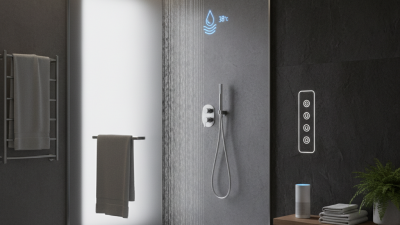
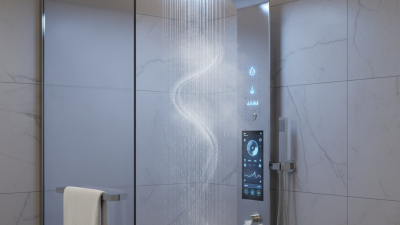
Choosing the right Smart Shower Set is not simply a matter of selecting the most expensive model. It requires careful attention to water pressure, temperature control, installation space, and daily habits. A beautiful digital panel means little if it responds slowly or becomes confusing during a rushed morning. In my experience, the best systems make showering easier without demanding constant attention.
Jamie Gold, author of Wellness by Design, describes the guiding idea clearly: “Technology should support wellness, not compete with it.” That principle matters when comparing thermostatic controls, voice commands, handheld sprays, rainfall heads, and app-based settings. A useful Smart Shower Set should remember preferred temperatures, reduce sudden heat changes, and provide controls that remain understandable with wet hands. Small details matter. A bright display can be irritating in a dark bathroom. A poorly placed control can force users to reach through cold water.
Reliability also deserves more attention than marketing language. Check the product’s water-pressure range, warranty coverage, replacement parts, and installer requirements. Some models may require electrical work or changes behind finished walls. That can increase the real cost. Energy-saving features sound attractive, but their performance depends on household habits and local water conditions. I would not assume every “smart” feature adds value. Sometimes, fewer controls create a better experience. The right decision balances comfort, safety, maintainability, and personal preference. Even careful buyers can overlook one practical issue: who will use the shower every day?
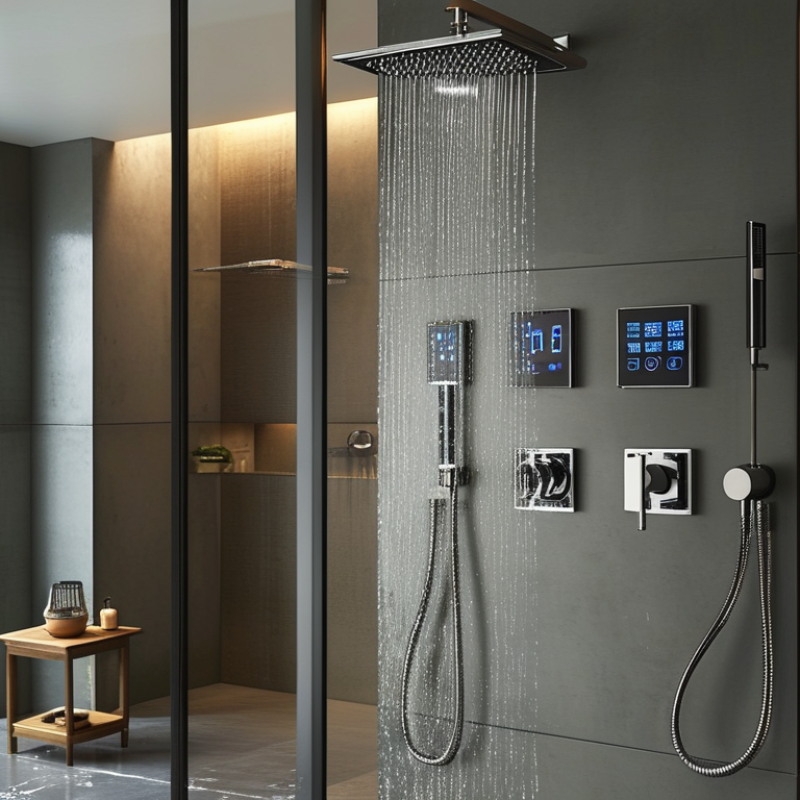
Begin with your real shower routine, not a feature list. Do you need precise temperature control, timed sessions, handheld flexibility, or safer settings for children? The U.S. Environmental Protection Agency’s WaterSense program reports that showers represent about 17% of residential indoor water use. That makes daily habits important, even when one shower feels insignificant.
Measure your current routine for one week. Record shower length, temperature changes, and whether the water runs while you wait. The EPA estimates that a WaterSense-labeled showerhead can save an average family nearly 2,700 gallons of water annually. It may also reduce water-heating energy use. However, household results vary. A four-minute shower and a fifteen-minute shower should not share the same settings. My first instinct would be choosing the most automated system. That is not always sensible. Simple controls may encourage better daily use.
Tips: Select a system with a clear flow setting, an easy pause function, and a visible timer. Check the rated flow rate before purchasing. WaterSense limits qualifying showerheads to 2.0 gallons per minute, compared with the federal maximum of 2.5 gallons per minute. Test your preferred spray pattern, if possible. A lower flow rate is useful only when the spray still feels comfortable. Review monthly water bills after installation. Data is more reliable than assumptions.
Choosing a smart shower set starts with comparing control options, not shiny screens. A 2024 Fortune Business Insights report forecasts double-digit growth for the smart shower market through 2032. That growth reflects demand for precise temperature control, timed showers, multiple outlets, and personalized presets. Look for thermostatic regulation, anti-scald protection, flow control, and a clear temperature display. Voice control feels convenient, but physical buttons remain valuable with wet hands. An app can save profiles, monitor water use, and start warm-up remotely. Still, app dependence may become annoying when Wi-Fi fails.
Water efficiency deserves equal attention. The U.S. EPA WaterSense specification limits labeled showerheads to 2.0 gallons per minute, compared with the federal 2.5-gallon standard. Choose a system that maintains spray pressure without hiding excessive flow. A handheld wand helps rinse children, pets, and tiled corners. Digital valves can improve accuracy, yet they also add installation complexity. I would not assume more automation means better performance. Sometimes, a reliable dial wins.
Tips: Test the control layout before installation. Keep the emergency shutoff accessible. Check whether presets work without internet access. Ask an installer about pipe size, electrical protection, and service access. Review the privacy policy before enabling voice features. Measure the shower enclosure carefully; oversized controls can crowd a narrow wall. Also, record your preferred temperature manually. Technology changes. Muscle memory is still useful.
| Feature or Control Option | Manual Mixer | Digital Thermostatic Control | Wall-Mounted Remote | Mobile App | Voice Control |
|---|---|---|---|---|---|
| Temperature accuracy | Depends on user adjustment | Precise electronic setting | Precise electronic setting | Precise electronic setting | Depends on system calibration |
| Thermostatic safety protection | Usually limited | Commonly available | Commonly available | Commonly available | Depends on installed hardware |
| Start/stop from outside the shower | No | Sometimes | Yes, if installed nearby | Yes, with a compatible connection | Yes, with a compatible connection |
| Preset temperature and shower modes | No | Basic presets | Basic to advanced presets | Often supports multiple presets | Usually limited to supported commands |
| Water-flow adjustment | Manual valve | Digital or rotary control | Buttons or dial | On-screen control if supported | Voice command if supported |
| Rainfall, hand shower, and body jets | Manual diverter required | Electronic or manual diverter | Button-based selection | App selection if supported | Voice selection if supported |
| Water-use monitoring | No | Not usually included | Sometimes available | Often available when a flow sensor is installed | Depends on connected system |
| Connectivity requirement | None | Usually none or local wiring | Usually wired or paired locally | Bluetooth or Wi-Fi may be required | Wi-Fi and a compatible voice platform may be required |
| Works during internet outage | Yes | Yes, if local controls remain powered | Usually, for local controls | Basic local operation may remain | Usually no voice commands |
| Installation complexity | Low to moderate | Moderate to high | Moderate to high | High when retrofitting hardware | High when integrating multiple devices |
| Best suited for | Simple, low-maintenance showers | Accurate temperature control | Easy physical access | Personalized routines and monitoring | Hands-free operation |
| Main limitation | Less automation and repeatability | Higher installation and electrical requirements | Requires accessible control placement | Depends on app compatibility and connectivity | Commands may fail because of noise, language, or network issues |
Before choosing a smart shower set, inspect your bathroom’s plumbing and electrical conditions. A beautiful control panel cannot fix weak water pressure or unsuitable wiring.
Check the existing pipe size, hot and cold water connections, and the distance to the shower outlet. Measure water pressure during busy household hours, not only when the bathroom is quiet. Some systems need stable pressure to maintain a consistent temperature. Others require separate hot and cold supplies. Confirm these details in the installation instructions.
Electricity needs equal attention. Identify the available voltage, circuit capacity, and location of the consumer unit. The shower may need a dedicated circuit, waterproof connections, and residual-current protection. Keep switches and sockets outside wet zones. A licensed electrician should inspect the wiring before installation. Local regulations can differ, even between nearby buildings.
Access also matters. An electronic valve hidden behind a tiled wall may become difficult to repair. Leave a practical access panel where possible. I once focused too much on the control design and overlooked the service space. That mistake would have meant removing tiles later. Think beyond installation day. Check whether the ceiling, wall cavity, and existing pipe routes can accommodate the valve and cables. If the setup seems uncertain, pause and request a plumbing and electrical assessment before ordering.
Check the water-flow requirement, plumbing connections, and electrical setup before purchasing. The chart compares common shower-flow reference points to help assess whether your existing water supply can support the selected system.
Most residential shower connections use a nominal 1/2-inch pipe, but the actual fitting and supply route should be verified. Confirm the shower system’s required voltage, circuit capacity, grounding, and GFCI or RCD protection with local electrical requirements. A system requiring higher flow than your plumbing can deliver may produce weak pressure or unstable temperature control.
How to Choose the Best Smart Shower Set?
Evaluate Safety, Water Efficiency, Installation, and Maintenance
Safety should guide every smart shower decision. Choose thermostatic control, an adjustable temperature limit, and reliable anti-scald protection. A certified electrical design matters in wet areas. Test the controls with wet hands before installation. Small details can prevent serious discomfort.
Water efficiency depends on measured performance, not attractive promises. Check the published flow rate at different pressures. A well-designed spray can feel strong while using less water. However, extremely low flow may encourage longer showers. Measure your household pressure first. It reveals whether the set will perform properly.
Installation details deserve equal attention. Confirm pipe size, power requirements, wall depth, and required access space. Ask whether a qualified installer must connect the electrical components. Keep an accessible panel for future repairs. During bathroom checks, I have seen hidden valves make simple maintenance expensive. Removable filters and easy-clean nozzles reduce that risk. Hard water may require more frequent cleaning. Keep spare seals available. My own preference is practical: fewer fragile touchscreens and clearer manual controls. A polished interface can still fail after one power interruption. Check warranty terms, service access, and replacement-part availability before buying. Test the system’s temperature stability, noise, and response time in realistic conditions. Then reconsider whether every smart feature earns its place.
A smart shower set should fit your bathroom, water pressure, and daily routine. I once focused too much on touch controls and overlooked installation costs. That mistake made the “cheap” option noticeably more expensive. Measure the existing pipe connections, shower space, and available power supply before comparing features. A qualified plumber can check pressure and wiring safely, especially during bathroom renovations.
Reliability matters more than a long feature list. Look for stable temperature control, clear physical buttons, and an easy-to-read display. A thermostatic system can help reduce sudden temperature changes, but it still needs proper installation. Check whether the set has relevant safety certifications for your region. Also examine the warranty, replacement parts, and service process. If a small sensor fails, you should not need to replace the entire system.
Set a complete budget, not only a purchase price. Include installation, plumbing adjustments, filters, electricity, and future cartridge replacement. A reliable model should offer useful manual controls if the app disconnects. That detail is easy to miss. Read recent customer feedback carefully, especially comments about leaks, software updates, and customer support. I would avoid paying extra for voice control if you rarely use it. A simple shower with dependable temperature control may serve your household better. Test the controls with wet hands, if possible. Small inconveniences become obvious during a rushed morning.